Proudly serving Phoenix, Glendale, Peoria, Scottsdale, Tempe, Mesa & surrounding areasCall or Text 24/7: +1 (480) 520-3949

Custom Concrete Patio Installation, Stamping, Staining, and Repair in Phoenix, AZ

Phoenix Concrete Co. installs and repairs concrete patios for homes and commercial properties across Phoenix, Arizona. Our patio services include new slabs, stamped and stained finishes, polished concrete, resurfacing and overlays, crack repair, pool decks, and connecting walkways. We plan each project for desert heat, caliche soil, and fast monsoon runoff. From backyard gathering spaces to higher-traffic commercial patios, the design and finish are matched to how the surface will be used.

Phoenix sees more than 100 days a year above 100?F, so mix selection, curing, drainage, and joint layout all matter. Expansive caliche soil and sudden monsoon water can undermine a poorly supported slab and lead to cracking, settlement, or flaking. Our crews follow ACI 330 slab-on-grade guidance, adjust placement for hot weather, and use UV-resistant sealers and coatings suited to direct desert sun. A site walk helps determine whether an existing patio can be repaired or resurfaced or whether replacement is the more practical path.

New slabs use a compacted aggregate base, properly placed reinforcement, and a 3,500 to 4,000 PSI ready-mix design selected for the site. Free on-site estimates cover measured square footage, base requirements, finish options, and expected cost before work begins.

Phoenix Concrete Co. installs and repairs concrete patios in Phoenix and throughout Scottsdale, Tempe, Mesa, Chandler, Glendale, and Gilbert.

★ ★ ★ ★ ★4.9/5 Average Rating · 20+ Years of Experience · Thousands of Customers Helped · Licensed & Insured · Residential & Commercial

Concrete Patio Options & Benefits
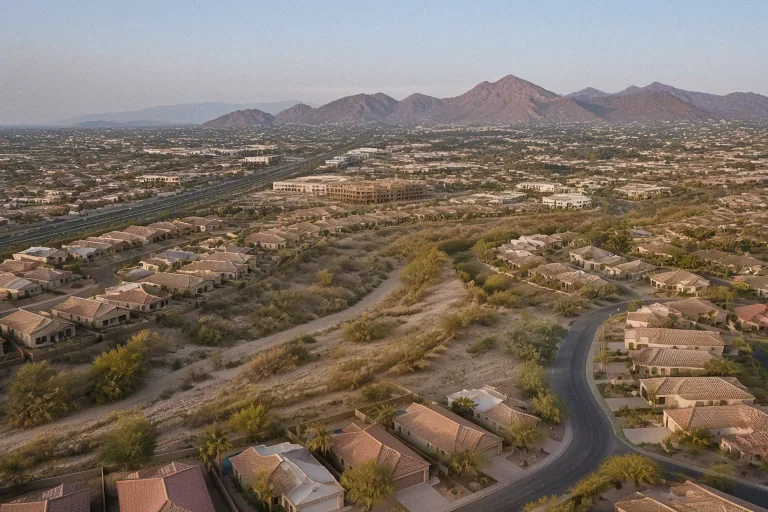
What Is a Concrete Patio?

A concrete patio is a slab-on-grade outdoor surface designed for seating, dining, recreation, and connections between the home, pool, walkways, and yard. In Phoenix, the slab must do more than look finished: it must carry everyday use while managing strong sun, wide daily temperature swings, and sudden runoff.

A well-planned patio can turn a gravel yard into usable outdoor space during the milder months from October through April. Phoenix Concrete Co. works on residential backyards from Arcadia to Ahwatukee and commercial patio spaces from Desert Ridge to Laveen, tailoring slip resistance, shade orientation, and finish to the property.

The performance starts below the visible surface. Proper base compaction, correctly placed reinforcement, planned control joints, and drainage sloped roughly one-quarter inch per foot away from the home help the slab resist movement and keep monsoon water from collecting near the foundation.

Benefits of a Concrete Patio

Concrete combines structural performance with finish flexibility, making it practical for simple backyard pads, decorative entertaining areas, pool decks, and commercial outdoor spaces. The right base, mix, drainage, and surface treatment determine how well those benefits hold up in the desert.

  • A properly installed patio can typically last 25 to 30 years in the Phoenix climate.
  • Broom, stamped, stained, polished, and coated finishes support different styles and budgets.
  • A planned slope directs monsoon runoff away from the home instead of letting it pool.
  • Concrete avoids the loose joints and ongoing reset work associated with many paver layouts.
  • Slip-resistant finishes can improve footing around pools and other wet areas.
  • Walkway extensions can connect the patio, pool deck, gate, and other hardscape.
  • Light, reflective finish choices can be more comfortable underfoot than dark stamped surfaces.
  • Structurally sound slabs may be refreshed with stain, resurfacing, an overlay, or a coating instead of full removal.
Phoenix Patio Services

Concrete Patio Services

Phoenix Concrete Co. provides new installation, decorative finishing, repair, resurfacing, overlays, coatings, sealing, pool deck work, and concrete walkways. Each recommendation starts with the slab condition, grade, sun exposure, use pattern, and desired appearance.

New Concrete Patio Installation

Worker using a power trowel to finish a new concrete patio slab at a jobsite in Phoenix, AZ.

New patio work begins with grade and soil evaluation, consistent excavation, and a compacted aggregate base. Forms, reinforcement, mix design, drainage, joints, and curing are then coordinated so the finished slab suits Phoenix heat and monsoon conditions.

Request Estimate

Stamped Concrete Patios

A worker stamping patterns into wet concrete for a patio project in Phoenix, AZ, with cacti in the background.

Stamped concrete can reproduce the look of flagstone, brick, or travertine without loose individual units. Installed pricing in Phoenix runs roughly $9 to $14 per square foot, depending on the pattern, coloring, release agent, and sealer.

Request Estimate

Stained Concrete Patios

Worker applying liquid stain to a concrete patio in Phoenix, AZ, surrounded by desert xeriscaping.

Acid stains and water-based stains can create earth-tone desert palettes or stronger accent colors. Staining is also an option for an older patio that remains structurally sound but needs a more finished appearance.

Request Estimate

Polished Concrete Patios

Worker applying liquid chemical stain to a residential concrete patio in Phoenix, AZ.

Polished concrete creates a smooth, reflective surface with a clean appearance. It can stay cooler underfoot than dark stamped finishes, which makes surface selection especially relevant for Phoenix pool decks.

Request Estimate

Patio Resurfacing and Overlays

Worker using metal squeegees to apply a concrete overlay to a worn patio in Phoenix, AZ.

Resurfacing places a new cementitious topping over a structurally sound slab to address minor pitting, discoloration, and hairline cracks. A thicker overlay can change the texture more substantially and turn a plain slab into a stamped or stained surface without complete demolition.

Request Estimate

Patio Repair, Pool Decks, and Walkways

A precision saw-cut groove being prepared for crack repair on a concrete patio in Phoenix, AZ.

Repair work addresses cracks, uneven areas, worn surfaces, and coating failures after the cause is identified. Pool deck concrete and connecting walkways can be planned with slip resistance, shade, drainage, and the surrounding hardscape in mind.

Request Estimate
Patio Finish Options

Types of Concrete Patio Finishes

The right finish depends on appearance, direct sun, foot traffic, slip resistance, slab condition, and budget. These options range from straightforward broom finishes to decorative patterns, color treatments, polishing, and protective coatings.

Worker using a power trowel to smooth a wet concrete patio slab at a jobsite in Phoenix, AZ.

Broom-Finished Concrete

A reinforced broom finish is the practical baseline for a new Phoenix patio. The textured surface works well for everyday backyard use and keeps decorative labor concentrated only where it adds value.

  • A standard 4-inch reinforced slab runs about $4.65 to $6.23 per square foot.
  • The Phoenix market average is around $5.44 per square foot for this basic finish.
  • Broom texture provides a simple, consistent surface.
  • Wire mesh or rebar is selected according to slab thickness and load requirements.
  • A plain field can be paired with a stained border or stamped accent.
Request Estimate
Textured stamp mats pressing a pattern into colored concrete on a patio in Phoenix, AZ.

Stamped and Colored Concrete

Stamped and colored concrete adds pattern and depth while retaining a continuous slab. The design can complement modern or rustic architecture with full-field texture, borders, or focused accent areas.

  • Installed stamped and colored work runs roughly $9 to $14 per square foot.
  • Patterns can resemble flagstone, brick, or travertine.
  • Color hardener and release agent shape the final tone and contrast.
  • Stamped borders can focus decorative work where it is most visible.
  • Sealing helps preserve the finished color and surface.
Request Estimate
Stained and colored concrete patio with natural finish and desert xeriscaping in Phoenix, AZ.

Stained and Colored Concrete

Stain adds color without imposing a stamped texture and can work on new or structurally sound existing concrete. The method is chosen according to the desired variation, opacity, and condition of the slab.

  • Stained or colored concrete typically runs $6 to $9 per square foot.
  • Acid stain creates natural tonal variation.
  • Water-based stain supports a broader range of accent colors.
  • Earth-tone palettes fit many desert exteriors.
  • Existing slabs must be structurally sound and properly prepared.
Request Estimate
Polished concrete patio with a stained finish and desert xeriscaping in the background in Phoenix, AZ.

Polished Concrete

Polishing produces a smooth, reflective patio surface and a streamlined appearance. On pool decks, finish selection also needs to account for foot comfort and appropriate slip resistance.

  • Polished patio concrete typically runs $8 to $12 per square foot.
  • The reflective surface can feel cooler than a dark stamped finish.
  • The smooth look complements modern outdoor spaces.
  • Surface condition determines whether an existing slab is a suitable candidate.
  • Poolside use calls for careful traction planning.
Request Estimate
Technician applying chemical stain to a concrete patio at a residential job site in Phoenix, AZ.

Coatings and Sealers

Coating and sealer selection should match the patio's sun exposure, moisture conditions, and use. Outdoor Phoenix surfaces need products and preparation methods that can tolerate UV exposure and daily temperature movement.

  • Epoxy performs well in interior or shaded areas.
  • Polyurethane and polyaspartic topcoats resist outdoor UV breakdown more effectively.
  • UV-resistant products help preserve color and gloss in direct desert sun.
  • Sealing helps limit water intrusion, staining, and surface scaling.
  • Mechanical grinding or diamond preparation helps avoid adhesion problems.
Request Estimate
Finding Your Right Fit

Choosing the Right Concrete Patio Approach

A site walk clarifies whether the project needs a new slab, targeted repair, resurfacing, a thicker overlay, or a decorative finish. The choice should account for structural condition, drainage, direct sun, expected traffic, poolside traction, desired style, and the amount of decorative work that fits the budget.

Climate-Specific Mix and Curing

Hot-weather placement changes how concrete must be handled. A pour at 8 a.m. in July behaves differently from one in November, so the crew can use early scheduling, retarding admixtures, wet curing, and adjusted finishing to slow moisture loss and reduce plastic shrinkage.

Drainage and Base Preparation

The slab is supported by 4 to 6 inches of compacted aggregate base, installed in lifts to reduce future settling. Forms are set to move water roughly one-quarter inch per foot away from the home, helping protect both the patio base and nearby foundation.

Licensed, Standards-Based Work

Phoenix Concrete Co. is licensed through the Arizona Registrar of Contractors. Patio work follows ACI 330 slab-on-grade practices, while ready-mix specifications aligned with ASTM C94 support consistent strength and slump from batch to batch; workmanship coverage, duration, and normal-wear exclusions are reviewed before signing.

What Sets Us Apart

Why Choose Us for Concrete Patio Installation?

Phoenix Concrete Co. combines local soil and climate planning with a defined installation process, suitable materials, and clear finish choices. We evaluate grade and slab condition before recommending repair or replacement, explain cost drivers during the estimate, and use UV-resistant outdoor products where direct sun demands them.

Get a Free On-Site Estimate

Cracking from Base or Curing

Three recurring causes of early cracking are inadequate base compaction, control joints placed too far apart, and plastic shrinkage during hot-weather placement. A compacted ABC base, joints every 8 to 10 feet, and wet curing or curing compound help control those risks.

Settlement and Uneven Surfaces

Uneven slabs often trace back to inconsistent base depth or soft spots in caliche-heavy soil. Testing and correcting the subgrade before the pour provides more uniform support than trying to patch settlement after it develops.

Peeling and Bubbling Coatings

Moisture trapped beneath a coating and inadequate surface preparation can lead to peeling or bubbles. Mechanical grinding or diamond preparation is more dependable than relying on acid etching alone before a new coating is applied.

UV Yellowing and Chalking

Standard epoxy can yellow and chalk under direct Arizona sun within one to two seasons. Polyaspartic and polyurethane topcoats hold color and gloss longer outdoors because they resist UV breakdown and remain flexible through daily temperature swings.

Pooling Water and Poor Drainage

Standing water after a monsoon can work beneath the slab, weaken base support, and direct moisture toward the foundation. Grade and surface slope should be planned before placement rather than corrected only after puddles appear.

Surface Pitting and Discoloration

Minor pitting, discoloration, and hairline cracks do not always require a full tear-out. When the underlying slab is structurally sound, resurfacing can renew the top surface, while a thicker overlay can also change its texture and appearance.

How It Works

Our Concrete Patio Process

The installation process moves from site evaluation and preparation through placement, finishing, curing, and sealing. Each step is adjusted for the property's grade, caliche conditions, load requirements, finish, and the weather expected during the pour.

01.

Site Walk and Grade Review

We measure the area, review the existing grade, locate utilities, discuss how the patio will be used, and note drainage or slab concerns. This visit also supports a free on-site estimate based on actual square footage, base work, and finish selection.

02.

Excavation and Caliche Check

The area is excavated to a consistent depth, and the subgrade is checked for hard caliche or unstable spots before the pour is scheduled. Problem soil is addressed so the base does not bridge over weak or poorly draining areas.

03.

Compact the Aggregate Base

We install 4 to 6 inches of aggregate base course and compact it in lifts with a plate compactor. The uniform layer supports the slab, manages moisture movement during monsoons, and reduces flex under thermal stress.

04.

Set Forms, Reinforcement, and Slope

Forms establish the patio layout and drainage slope, while wire mesh or rebar is selected for the slab thickness and expected load. The surface is set to drain roughly one-quarter inch per foot away from the home.

05.

Pour, Finish, and Joint the Slab

A 3,500 to 4,000 PSI mix suited to Arizona heat is placed, consolidated, and finished to the selected texture. Control joints are laid out to guide normal shrinkage cracking instead of leaving cracks random.

06.

Cure, Seal, and Review

Summer pours may start early and use retarding admixtures, wet curing, or curing compound to slow evaporation. After the surface is ready, the specified UV-resistant sealer or coating is applied, and care expectations are reviewed.

Plan Your Patio

Schedule a Concrete Patio
Consultation

Request a free on-site estimate to review the patio area, drainage, existing slab condition, base needs, finish options, and measured square footage. Phoenix Concrete Co. will explain the practical installation, repair, or resurfacing path and the cost factors before you commit.

Phoenix Patio Help

Concrete Patio FAQs

These answers cover common questions about Phoenix concrete patio pricing, finishes, preparation, repair, and maintenance. For a recommendation based on an actual yard or existing slab, request an on-site estimate.

Call About Your Patio

A 20x20 patio is 400 square feet. A basic reinforced broom finish at $4.65 to $6.23 per square foot works out to roughly $1,860 to $2,490, while a finished decorative patio with stamping, staining, color, or raised design elements typically runs $3,200 to $7,200.

A typical 400-square-foot patio at 4 inches thick requires roughly 5 cubic yards of concrete. With Phoenix ready-mix commonly running $150 to $200 per cubic yard delivered, the concrete material alone is generally $750 to $1,000 before labor, aggregate base, reinforcement, forms, and finishing.

A properly installed concrete patio in the Phoenix climate typically lasts 25 to 30 years. Base support, drainage, joint layout, curing, UV exposure, coating or sealer care, and how the surface is used all affect its service life.

The installation uses 4 to 6 inches of compacted aggregate base course, placed in lifts with a plate compactor. This provides uniform support and helps manage moisture movement beneath the slab during monsoon season.

The main controls are consistent base compaction, correctly spaced control joints, suitable reinforcement, and curing that prevents rapid moisture loss. Phoenix Concrete Co. places control joints every 8 to 10 feet and uses wet curing or curing compound for hot-weather work.

A broom finish is practical and textured, stamping creates a flagstone, brick, or travertine look, stain adds color, and polishing creates a smooth reflective surface. Direct sun, desired appearance, poolside traction, slab condition, maintenance, and budget should guide the selection.

Stamped concrete runs roughly $9 to $14 per square foot installed in Phoenix. Pattern complexity, color hardener, release agent, accent borders, and sealing influence where a project falls within that range.

Resurfacing uses a cementitious topping to renew a structurally sound slab with minor pitting, discoloration, or hairline cracks. An overlay is thicker and can change the texture more substantially, including creating a stamped or stained decorative surface.

Epoxy is better suited to interior or shaded areas. For exposed patios, polyurethane and polyaspartic topcoats resist UV breakdown, yellowing, and chalking more effectively while staying flexible through daily temperature changes.

Sealing helps protect the surface from water intrusion, stains, and scaling. Phoenix heat and UV exposure degrade sealers faster than milder climates, so reapplication should follow the product and site-specific care schedule reviewed for the patio.

Pool decks need a finish chosen for slip resistance, foot comfort, shade, drainage, and compatibility with the surrounding hardscape. A light or polished surface can stay cooler underfoot than a dark stamped finish, but the final texture still needs appropriate traction.

Yes. Residential work includes backyard living areas, pool decks, and connecting walkways, while commercial patios must also account for heavier foot traffic, ADA slope and clearance requirements, and City of Phoenix Development Services Department permitting. Phoenix Concrete Co. handles both scopes and pulls the appropriate permits before work begins.

Phoenix Concrete Co. installs, repairs, and resurfaces patios throughout Phoenix, including residential areas from Arcadia to Ahwatukee and commercial spaces from Desert Ridge to Laveen. Surrounding service communities named for this work include Scottsdale, Tempe, Mesa, Chandler, Glendale, and Gilbert.