Proudly serving Phoenix, Glendale, Peoria, Scottsdale, Tempe, Mesa & surrounding areasCall or Text 24/7: +1 (480) 520-3949

Concrete Driveway, Patio, and Foundation Installation for Paradise Valley, AZ

Phoenix Concrete Co. builds concrete driveways for homeowners and commercial properties in Paradise Valley, Arizona. Our driveway work includes new installation, stamped and decorative finishes, colored and stained concrete, resurfacing, crack repair, and sealing. We prepare the subgrade, size reinforcement and slab thickness for the planned vehicle loads, and finish each pour for the property. From plain broom finishes to custom estate motor courts, the work is planned around local soil, heat, drainage, and design needs.

Paradise Valley sees well over 100 days a year above 100 degrees, so unprotected concrete faces repeated expansion, contraction, and intense ultraviolet exposure. Caliche and expansive clay pockets can also trap moisture or shift beneath a slab when the base is not prepared correctly. Monsoon drainage, hillside lots, designated washes, and community design requirements add property-specific decisions before concrete is poured. An on-site evaluation and written quote establish the thickness, reinforcement, finish, sealing, and drainage approach before work begins.

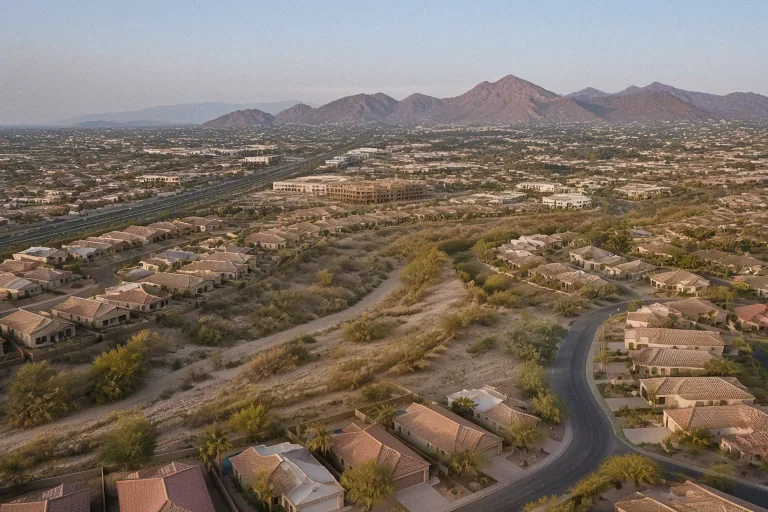
Service reaches estates along Lincoln Drive, the Mummy Mountain and Camelback Mountain areas, properties near Paradise Valley Country Club, Cheney Drive communities, and resort-adjacent sites. Paradise Valley is a community of roughly 12,658 residents where soil and drainage conditions can vary block by block.

5-star rating4.9/5 Average Rating - 20+ Years of Experience - Paradise Valley Concrete Contractor Specialists - Residential & Commercial
Driveway Services

Concrete Driveway Services in Paradise Valley, AZ

Choose from new driveway installation, structural and surface repair, resurfacing, sealing, or decorative upgrades after the existing slab, base, drainage, and intended vehicle use are evaluated. The same driveway-focused service also extends to nearby Phoenix, including the Biltmore and Arcadia areas named in our service coverage.

Concrete Driveways

Worker using a power trowel to smooth a wet concrete driveway in Paradise Valley, AZ.

Driveway services cover excavation, base preparation, installation, repair, resurfacing, decorative finishing, and sealing. Each recommendation starts with the slab's structural condition and the property's soil, drainage, load, and appearance goals.

Explore Service

Concrete Patios

Worker using a power trowel on a concrete slab at a residential job site in Paradise Valley, AZ.

Installation runs from removal and grading through forms, reinforcement, placement, control joints, curing, and sealing. Residential driveways commonly use a 4-inch slab, while sections carrying trucks or heavier vehicles may reach 6 inches, with concrete typically rated at 3,000 to 4,000 PSI.

Explore Service

Concrete Slabs

A worker uses a power trowel to finish a fresh concrete slab at a jobsite in Paradise Valley, AZ.

Repair begins by determining whether cracking, spalling, settling, or heaving is isolated or tied to broader subgrade movement. Hairline and moderate cracks may be candidates for structural epoxy injection, while a significantly settled or heaved section can require full panel replacement.

Explore Service

Concrete Foundations

Steel rebar cage on plastic chairs with wooden forms for a concrete foundation in Paradise Valley, AZ.

Maintenance centers on keeping joints, cracks, drainage, and the protective sealer in working condition. For driveways under full sun, resealing every 2 to 3 years helps resist oil stains, efflorescence, surface dusting, ultraviolet exposure, monsoon rain, and irrigation overspray.

Concrete Sidewalks

Worker operating a power trowel on a concrete sidewalk in Paradise Valley, AZ.

Replacement is appropriate when failed panels, unstable base conditions, or widespread movement make surface-only work a poor fit. The process can include removing old concrete or asphalt, correcting the subgrade and drainage elevation, and rebuilding the driveway with load-appropriate reinforcement.

Concrete Walkways

Worker operating a power trowel to finish a concrete slab at a residential site in Paradise Valley, AZ.

A driveway inspection looks beyond the most visible crack to assess soil, slab movement, drainage flow, reinforcement needs, finish condition, and access constraints. That site evaluation supports a written quote covering thickness, reinforcement, finish, sealing, and any Town or HOA requirements that apply.

Concrete Repair

Concrete fracture repaired with polyurethane sealant in a saw-cut groove in Paradise Valley, AZ.

Residential work ranges from single-car driveways to long approaches and motor courts serving multiple garage bays. Reinforcement, thickness, drainage slope, texture, tone, and HOA design considerations are matched to the lot rather than applied from one town-wide specification.

Stamped Concrete

Stamped concrete patio with stone-pattern texture at a luxury residence in Paradise Valley, AZ.

Commercial and resort-adjacent driveways may need to support delivery trucks, valet traffic, and frequent vehicle turnover. These applications often use 6 inches or more of concrete with rebar reinforcement, plus project scheduling and permit coordination planned around site operations.

Concrete Pavers

Interlocking concrete pavers set in sand at a residential job site in Paradise Valley, AZ.

When a new crack, settled panel, or drainage problem creates an immediate concern, the correct first step is still a complete driveway assessment. The repair scope should follow the slab and base condition rather than a rushed surface patch that leaves the cause unresolved.

Commercial Concrete

Worker operating a power trowel on a concrete slab at a jobsite in Paradise Valley, AZ.

Free driveway quotes are prepared after a site walk so square footage, removal, base repair, thickness, reinforcement, drainage, and finish can be itemized. That property-specific review makes the budget more useful than pricing a Paradise Valley driveway from a phone description alone.

Driveway Planning

How to Choose a Concrete Driveway Plan in Paradise Valley

A sound driveway plan starts below the finish. Compare how each proposal addresses existing demolition, caliche or clay, base compaction, slab thickness, reinforcement, drainage, control joints, curing, finish, sealing, permits, and HOA review rather than choosing on appearance or price alone.

Soil and Subgrade Evaluation

Caliche can be difficult to excavate and may trap water when it is not handled correctly, while expansive clay changes volume with moisture. A site evaluation should determine excavation depth, base repair, drainage, and compaction needs before the forms are set.

Slab Thickness for Vehicle Loads

Thickness should follow expected use, not a one-size-fits-all rule. A residential passenger-vehicle area can differ from a delivery route, valet lane, or estate motor court that regularly carries trucks and needs a thicker section.

Reinforcement Planning

Steel rebar and welded wire mesh serve different load and slab conditions. The proposal should identify the reinforcement type and layout, especially where heavier vehicles, wide panels, expansive soil, or commercial traffic increase stress.

Drainage and Slope Design

The finished elevation should move monsoon runoff away from the garage, foundation, neighboring parcels, and low spots. Hillside lots and properties near designated washes can also require closer review of setbacks and the approved discharge point.

Finish and Sealer Selection

Broom, stamped, exposed-aggregate, scored, stained, colored, and polished finishes respond differently to sunlight, traffic, shade, and surrounding hardscape. A compatible penetrating or acrylic sealer protects the selected surface and should be part of the maintenance discussion.

Written Scope and Local Requirements

A useful written quote states removal, square footage, thickness, reinforcement, finish, sealing, and any base or drainage work. It should also identify applicable Town of Paradise Valley permits and community design approvals before construction starts.

Paradise Valley Driveway Issues

Common Concrete Driveway Problems

Visible driveway damage often traces back to a combination of desert heat, unstable or poorly compacted base material, water movement, and missed maintenance. An inspection separates cosmetic wear that may accept resurfacing from structural movement that calls for repair or replacement.

Request Driveway Inspection

Heat-Cycle Cracking

Summer surface temperatures regularly exceed 110 degrees, and unsealed concrete can exceed 140 degrees in intense Valley heat. Repeated expansion and contraction concentrate stress at weak points when joint spacing, curing, reinforcement, or base preparation is inadequate.

Spalling and Surface Dusting

Intense ultraviolet exposure, irrigation overspray, monsoon rain, and a worn protective sealer can leave the surface dusty, scaled, or spalled. Structurally sound slabs may accept a bonded overlay after proper surface preparation, while deeper deterioration needs a different repair plan.

Settling and Birdbaths

Driveways poured 15 to 20 years ago without modern reinforcement or adequate base compaction may sink, hold water in birdbaths, or crack along their edges. A settled panel should be evaluated for subgrade movement before a surface patch is chosen.

Monsoon Water Intrusion

Monsoon season typically runs from June through September, bringing short downpours that expose poor slope and open cracks quickly. Water entering beneath the slab can weaken the base, aggravate clay movement, and widen damage during later heat cycles.

Caliche and Expansive Clay Movement

Dense caliche can resist excavation and trap moisture below a slab, while clay pockets swell and contract as moisture changes. Because these conditions vary around the basin and near washes, excavation and base depth must follow the lot rather than a generic specification.

Unsealed Surface Wear

An unsealed driveway is more vulnerable to oil stains, efflorescence, color loss, dusting, rain, and irrigation exposure. Timely sealing is especially important for stained, colored, stamped, or decorative surfaces whose appearance is part of the property design.

Why Choose Us

Why Choose Phoenix Concrete Co. for Paradise Valley Driveways?

Driveway work in Paradise Valley benefits from crews familiar with caliche excavation, moisture-sensitive clay, estate access, monsoon drainage, and heat-conscious placement. Phoenix Concrete Co. also plans around Town permitting, HOA finish review, utility locates, and the documentation property owners expect.

Paradise Valley Soil Experience

Local driveway experience includes hardpan near Mummy Mountain and moisture conditions on properties closer to washes. That familiarity informs excavation depth, base preparation, reinforcement, and mix planning without assuming every Paradise Valley lot behaves the same way.

Town and HOA Coordination

Phoenix Concrete Co. handles required permit coordination through the Town of Paradise Valley building division and utility locates through Arizona 811. Finish colors, setbacks, drainage review, and community design rules are addressed before installation when they apply.

Direct Crews and Coverage Documentation

Driveway work is performed without subcontracting it to third parties, keeping responsibility consistent from excavation through the final seal coat. The company is licensed and insured, and provides coverage documentation as part of the quote process for property owners and HOA-governed sites.

Six-Step Process

Our Concrete Driveway Process in Paradise Valley

Each project moves from property-specific evaluation and approvals through excavation, base preparation, reinforcement, placement, curing, sealing, and a final walkthrough. The sequence is adjusted for soil, drainage, vehicle load, access, finish, and Arizona heat without skipping the structural work beneath the visible surface.

01.

Site Evaluation and Written Quote

The first visit documents existing pavement, soil exposure, drainage flow, vehicle use, dimensions, access, and applicable HOA or Town restrictions. The written quote then defines thickness, reinforcement, finish, sealing, removal, and any identified base work.

02.

Permits and Utility Locates

Required permitting is coordinated through the Town of Paradise Valley building division. Arizona 811 utility locates and any applicable community design review are handled before excavation begins.

03.

Demolition and Excavation

Old concrete or asphalt is removed, and the site is excavated and graded to the planned elevation. Caliche, soft areas, expansive clay, and drainage paths are addressed according to what the lot reveals.

04.

Base Compaction, Forms, and Reinforcement

Base material is compacted in lifts with a plate compactor or roller to resist future settling. Forms establish the perimeter and slope, followed by the specified steel rebar grid or welded wire mesh.

05.

Heat-Conscious Pour and Finish

Placement is timed around Arizona heat when possible, often for early morning, to slow curing and support finish quality. The crew places, screeds, and floats the mix before applying the selected broom, stamped, exposed-aggregate, colored, or other specified finish.

06.

Joints, Curing, Sealing, and Walkthrough

Control joints are cut within 6 to 12 hours of the pour. The slab cures for at least 7 days before foot traffic and 28 days before full vehicle load; sealing follows the applicable cure period, and the completed driveway is reviewed with the property owner.

Driveway Outcomes

Concrete Driveway Results for Paradise Valley Properties

Case Study 1: New installation outcome: A correctly excavated, compacted, reinforced, graded, jointed, and sealed driveway is built to manage vehicle loads, desert heat, and monsoon drainage from the start.

Case Study 2: Surface renewal outcome: A structurally sound but weathered slab can receive a bonded overlay typically from one-quarter inch to 1.5 inches thick, restoring a uniform surface with optional color, texture, or stamped pattern.

Case Study 3: Decorative finish outcome: Integral color, scoring, aggregate, borders, or staining can align the driveway with stucco, stone, and desert landscaping; stains are applied after the concrete cures fully, typically at 28 days, and then sealed.

Property-Specific Quote

Plan Your Paradise Valley Concrete Driveway Project

Request a free concrete driveway quote built around the actual square footage, soil, removal, thickness, reinforcement, drainage, finish, and sealing needs of your property. The on-site evaluation provides the information needed for a clear scope before scheduling.

Driveway Answers

FAQs About Concrete Driveways in Paradise Valley, AZ

These answers cover driveway pricing, thickness, repair, finishes, curing, sealing, contractor selection, and local service coverage. Final recommendations and quotes depend on an on-site review of the slab, base, drainage, loads, and finish.

Call Phoenix Concrete Co.

A 200-square-foot driveway, about a 10-by-20-foot footprint, typically costs $1,600 to $3,800 installed. Finish choice, base condition, reinforcement, sealing, and removal of an existing slab determine where the project falls within that range; decorative work generally moves it higher.

A 30-by-40-foot driveway covers 1,200 square feet. At a typical range of $8 to $20 per square foot, that is roughly $9,600 to $24,000, with plain broom-finished concrete toward the lower end and stamped, colored, or decorative work toward the upper end or beyond.

Asphalt is typically cheaper upfront at $5 to $12 per square foot compared with a general concrete range of $6 to $15 per square foot. Asphalt commonly needs resealing every 2 to 3 years and resurfacing every 15 to 20 years, while a properly built and sealed concrete driveway commonly lasts 25 to 30 years and does not soften and rut in peak summer heat.

Paradise Valley is an affluent Arizona community known for golf courses, resort properties, private clubs, and upscale residential estates. The town recorded 12,658 residents in the 2020 census and sits beside Scottsdale and Phoenix, with Camelback Mountain and Mummy Mountain shaping its setting.

Cost depends on crack length and depth, whether the damage is isolated, and whether the base has settled or heaved. Structural epoxy injection for a hairline or moderate crack is far less involved than full panel replacement, so the entire driveway should be inspected before a repair is priced.

A standard residential driveway pour can use about 5 to 15 cubic yards depending on its area and thickness. Ready-mix pricing fluctuates with cement costs, delivery distance, and minimum-load charges, and material is only one part of a completed driveway price alongside forming, reinforcement, labor, finishing, and sealing.

Look for a licensed, insured contractor with direct experience in Paradise Valley soil, heat, drainage, permitting, and community design review. Ask for an on-site evaluation and a written quote that explains base preparation, compaction, thickness, reinforcement, control joints, finish, and sealing rather than comparing price alone.

A standard residential driveway is commonly 4 inches thick. Areas expected to carry trucks or heavier vehicles may be built up to 6 inches, while commercial or resort-adjacent sections can be 6 inches or more with rebar reinforcement based on repeated traffic.

For a sealed driveway under full sun, the recommended interval is every 2 to 3 years. A suitable penetrating or acrylic sealer helps the surface resist ultraviolet exposure, monsoon rain, irrigation overspray, oil stains, efflorescence, and dusting.

The installation process allows at least 7 days before foot traffic and 28 days before full vehicle load. Arizona heat affects placement and moisture loss, so pours are often scheduled early in the day and the specified curing plan should be followed before sealing or loading the slab.

Options named in the driveway plan include stamping, exposed aggregate, salt finishes, scored patterns, border accents, integral color, acid or water-based stains, and polishing for covered or partly shaded sections. The right choice depends on architecture, existing hardscape, ultraviolet exposure, traffic, texture, and maintenance preferences.

Resurfacing can fit a structurally sound slab whose surface is worn but whose base remains stable. After surface preparation and a bonding agent, a bonded concrete overlay typically one-quarter inch to 1.5 inches thick can restore uniformity and accept color, texture, or a stamped pattern.

Joint intervals are matched to slab thickness; a 4-inch driveway commonly uses spacing of 8 to 10 feet. The installation process calls for cutting joints within 6 to 12 hours after placement so shrinkage is directed into planned lines instead of random cracks.

Budget benchmarks include a $6,400 national average project cost, typical Paradise Valley project data of roughly $4,083 to $7,655, and a standard installation range of $8 to $20 per square foot; larger estate drives can exceed those totals. Existing pavement removal, unstable-base repair, thickness, reinforcement, and finish complexity drive the final quote, with highly decorative work reaching $28 or more per square foot.

Coverage includes Paradise Valley estates along Lincoln Drive, areas near Paradise Valley Country Club, Mummy Mountain, Camelback Mountain's north face, Cheney Drive, and resort corridors. Surrounding service areas named in the draft include Scottsdale near Old Town and North Scottsdale, Phoenix neighborhoods near Biltmore and Arcadia, Cave Creek, and Carefree.